

Submitted by Barry McPhillips on 14 July 2011
...continued from Psychology, Selling and the Internet – Part 1 of 5
2. Listening to authority

We all know it – people listen unquestioningly to authoritative figures. If you hold anyone in high regard as an authority, you will usually unquestioningly listen and do as they say. Think about your doctor, lawyer, and sports coach. These people can tell you to do what most people can’t and you will almost always do it without questioning it.
This means that your site should have someone or some organisation of recognised authority in that field saying something positive about your product or service. It doesn’t have to be famous people, just authority heads. For example, a travel service can have a review by some magazine editor and a healthcare site can have some comments from some doctors.
Submitted by Barry McPhillips on 6 July 2011

Brian Tracy is the master when it comes to using the power of psychology when selling just about anything to anyone. He really knows his stuff better than anyone else. I’m in awe of his prowess and success. See for yourself here www.briantracy.com – but first read on, it will make more sense.
In all of his many books he’s published however, he’s never actually conveyed the technique of using his approach to selling via the Internet. You see all of what he says is so true about having clear sales goals, understanding why people buy, how being creative sells, getting appointments, generating desire etc but we all know that our normal offline lives are very different to the way we behave online. The selling game has changed and the world operates by very different rules. New rules created entirely by the Internet.
In a series of blog posts I want to share 8 psychological phenomena that work beautifully when it comes to online sales. Learn, master and apply these and your online success will definitely soar.
Submitted by Anthony Neate on 24 June 2011
“If you build a PPC Campaign correctly, targeted traffic will come”
That’s what Ray Liotta said in the 1989 classic ‘Field of Dreams.’ OK, I added a few words in to make it relevant to this post, but in essence we can take what he said and use it as inspiration for building highly relevant, better performing PPC campaigns.
Clickthrough Rate (CTR) is one of the most important factors in ensuring a good performing PPC campaign. Not only does it give a clear indication of the relevance of the traffic that you’re generating, it is also one of the defining factors of Quality score. This means that by increasing your CTR, you could get more out of your clients’ money!
Read on for 10 easy to implement tips to maximise your CTR.
Submitted by Billy Bamford on 3 August 2010

The Roundhouse in Camden holds almost legendary status as a cultural and historical melting pot, most famously known as a music and performing arts venue. To name but a few, it plays host to the iTunes Festival, Electric Proms and recently solo greats such as Smoky Robinson and Bob Dylan (of which I was lucky enough to get a ticket). However it isn’t just a venue, it’s a charity that prides itself on its strong youth focus with its doors open to 11-25 year olds who are free to use and encourage the learning of TV, Radio , Music and Media Production in any of the 24 state of the art studios that reside underneath the iconic, acoustically prolific upper performing space.
Submitted by Billy Bamford on 2 August 2010

A Brief History of Web Design & Usability
In the early days of designing and building websites there were very few conventions to follow; everything was new, exciting and uncharted. Elements that we are now familiar with on the web, like search boxes, buttons, headings, navigation, layouts and logo positions were often interpreted & presented in a wide variety of new styles, some good, some not so good- standards had yet to be set. The web was a difficult place to find your way around; a dark room full of unknown signs, signals and doorways.
Submitted by Billy Bamford on 26 May 2010

In the world of web design, using typefaces other than the very limited list of cross platform system fonts has meant using images, flash or some other piece of webtrickery, often resulting in content being difficult to update, format or index in search engines. This has meant that most web designers have simply stuck to the usual stack of well known and safe options – Arial, Georgia, Comic Sans [gasp -not really] etc and avoided alternative fonts in body of their designs, unless absolutely necessary. However, at a time when the web is moving forward rapidly in so many other ways, is avoidance your only option? I personally think we may have just quietly turned a rather lovely and fruitful corner…
Submitted by Paul Gregory on 18 May 2010
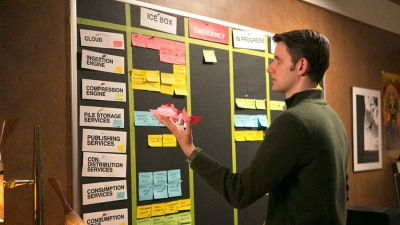
Over the past 3 years, the Digital team at Access has grown dramatically in number and in work load. With the steep increase in number and complexity of projects, our Monday morning work-in-progress notes were becoming unworkable. Within hours the sheets were out of date and scribbled on, things were getting forgotten about and there was far too much pinging of emails back and forth. It was becoming evident that we needed a better way of managing tasks within the department.